14/05/26
Urban theatre
Leandro Madrazo
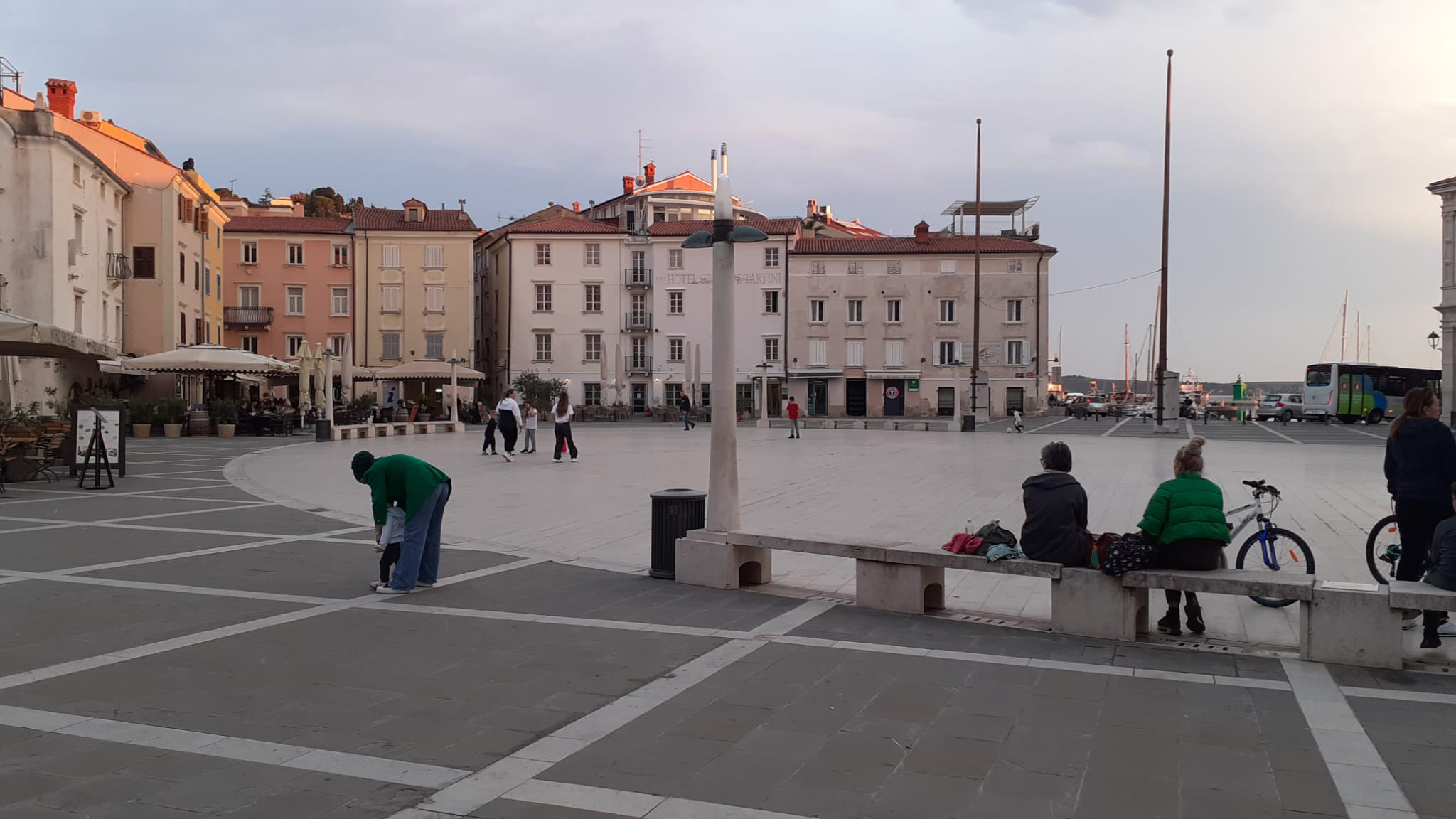
In The Concise Townscape (1961), Gordon Cullen understands public space as a place shaped through the relationship between centre, edge, movement, and perception. Tartini Square appears as an enclosed civic stage defined by the continuous façades surrounding it, while remaining visually open toward the sea and the horizon line. The contrast between the dense architectural border and the expansive paved surface creates what Cullen describes as “exposure and enclosure” — a spatial tension that gives emotional character to urban space.
People crossing the open centre of the square appear exposed within the large civic void, while others seated along the perimeter occupy positions of observation and retreat. The benches along the edge act as thresholds between participation and spectatorship, turning the square into what Cullen might describe as a “drama of juxtaposition.” The open pavement becomes a field of movement and encounter, while the architectural edges provide containment, orientation, and visual continuity.
The spatial arrangement of the square heightens the observer’s awareness of position within the environment. From the foreground benches to the distant harbour edge, the viewer experiences depth, direction, and orientation through the positioning of bodies and built elements. The paving lines guide movement across the square toward the waterfront, while the vertical poles and surrounding façades establish rhythm and spatial order.
The foreground seating area establishes the “Here” of pause and observation, while the harbour and maritime horizon form the distant “There” toward which the space opens.
14/05/26
Town and Sea, Urban Form and Memory
Leandro Madrazo
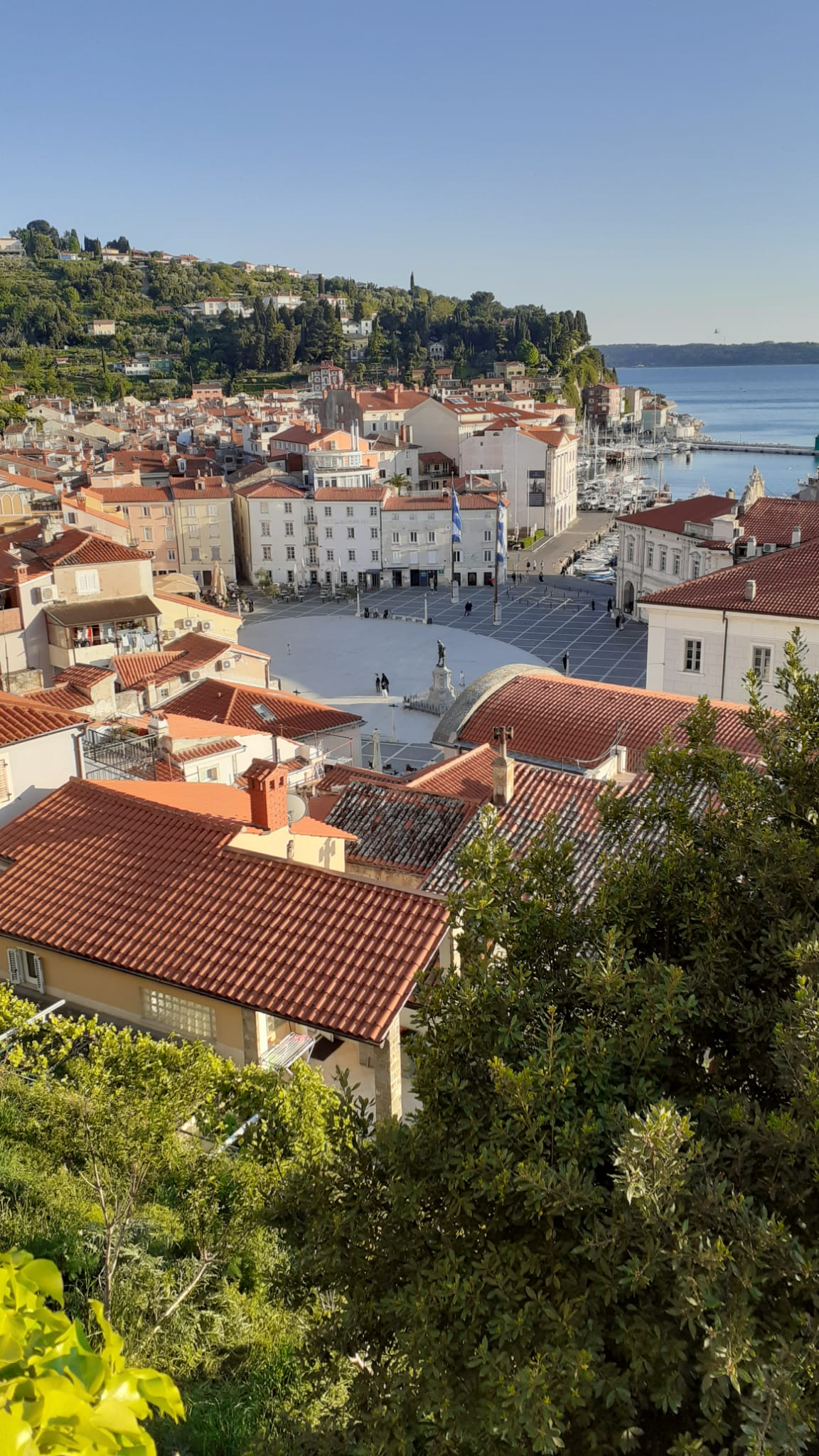
Piran emerges as a meeting point between urban fabric and sea. At its centre, Tartini Square appears as an extension of the waterfront, as if the sea itself had become urbanised; the arc of the elliptical pavement recalls a wave entering the town. The monument to Giuseppe Tartini gives symbolic focus to the square, embodying the cultural identity and historical memory of Piran. Positioned along the axis between sea and town, it appears almost to float between them, mediating between civic space and the maritime horizon.
From the elevated viewpoint, the topography of the town is revealed through cascading roofs and streets descending toward the harbour, emphasising Piran’s adaptation to the hillside and its dense Mediterranean urban character. Although absent from view, St. George's Parish Church remains implicitly present behind the observer. The church anchors the perspective and recalls the historical role of religious authority overlooking both civic and maritime life.
In the background, the Istrian Peninsula defines the distant horizon, framing the town between the sea and the wider landscape of the Adriatic, while recalling the maritime and commercial routes that long connected Piran to the coastal towns of Istria and the Venetian world.
02/06/21
Capturing the socio-ecological memory
Suruchi Didolkar
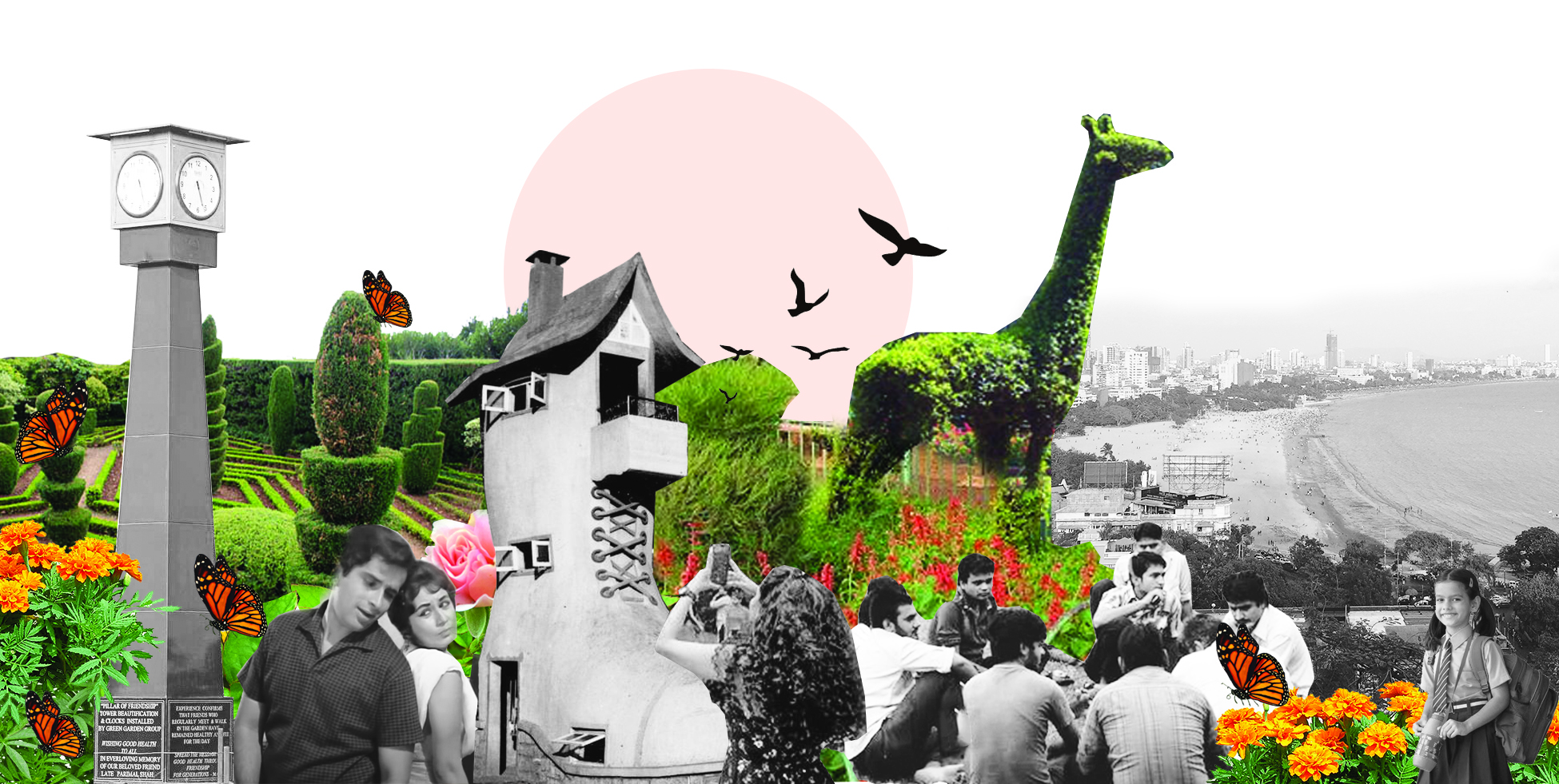
‘Urban gardens’ are a plethora of socio-cultural, historical and environmental learning, that allows varied observant assert the sense of ‘the right to the city’ or reclaim an ‘urban commons’. One such urban garden uniquely hanging upon a historical water reservoir on Malabar Hill has been a source of solace and wonder for all. Beautifully designed by Ulhas Ghapokar in 1881 and dedicated to Sir Pherozshah Mehta, it is narrated to have been built over one of Bombay’s main water reservoirs to protect it from getting polluted by the nearby towers of silence. The garden is a manifestaton of a positive energy welcoming diverse group of visitors who see their interests towards fostering ‘civic ecological sense’ and ‘social associations’ with the flora-fauna and history in the city.
02/06/21
Spirituality descending upon Simplicity
Taher Abdel-Ghani
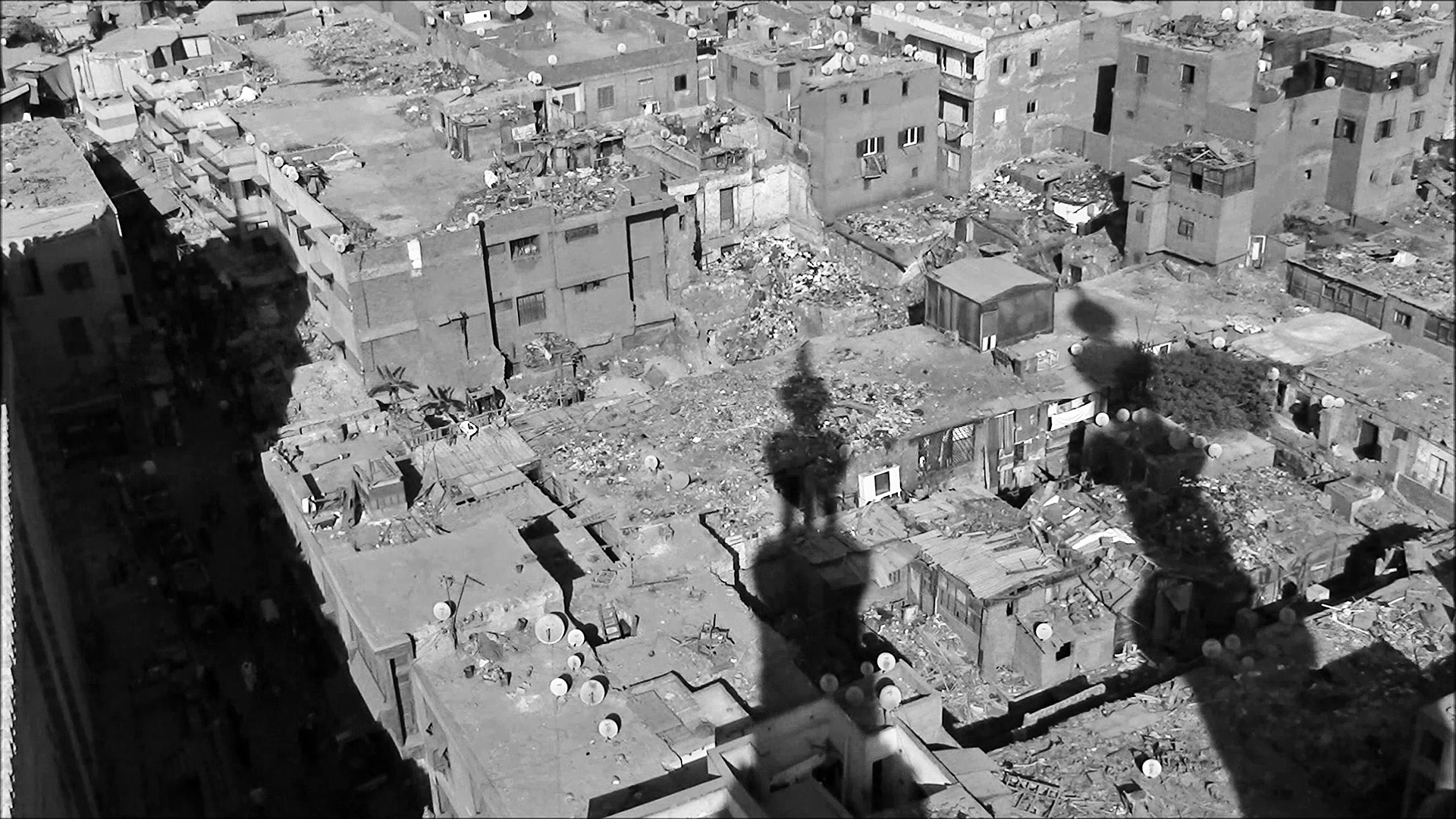
In Old Cairo, I went up one of the minarets that overlooks a narrow traditional commercial street that cuts through the hustle and bustle of the area. It was shortly past noon, and the sun projected the shadows of the minarets onto the rooftops of small informal houses. Upon seeing this, I came to realize the clash of tradition with contemporary methodologies in how our cities are shaped. We, products of contemporary products, do not see or buy or even comprehend genuineness any longer. We follow the national agenda of globalization. On the other hand, local inhabitants are the ones who resist the foreign market. Their resilience defines their identity. They create their own economy and city. Their spirit beautifies their simplicity.
Winner of the third prize of the A-Place Mapping contest "Share your experience of places" 2021
13/05/21
A relaxing place
vero
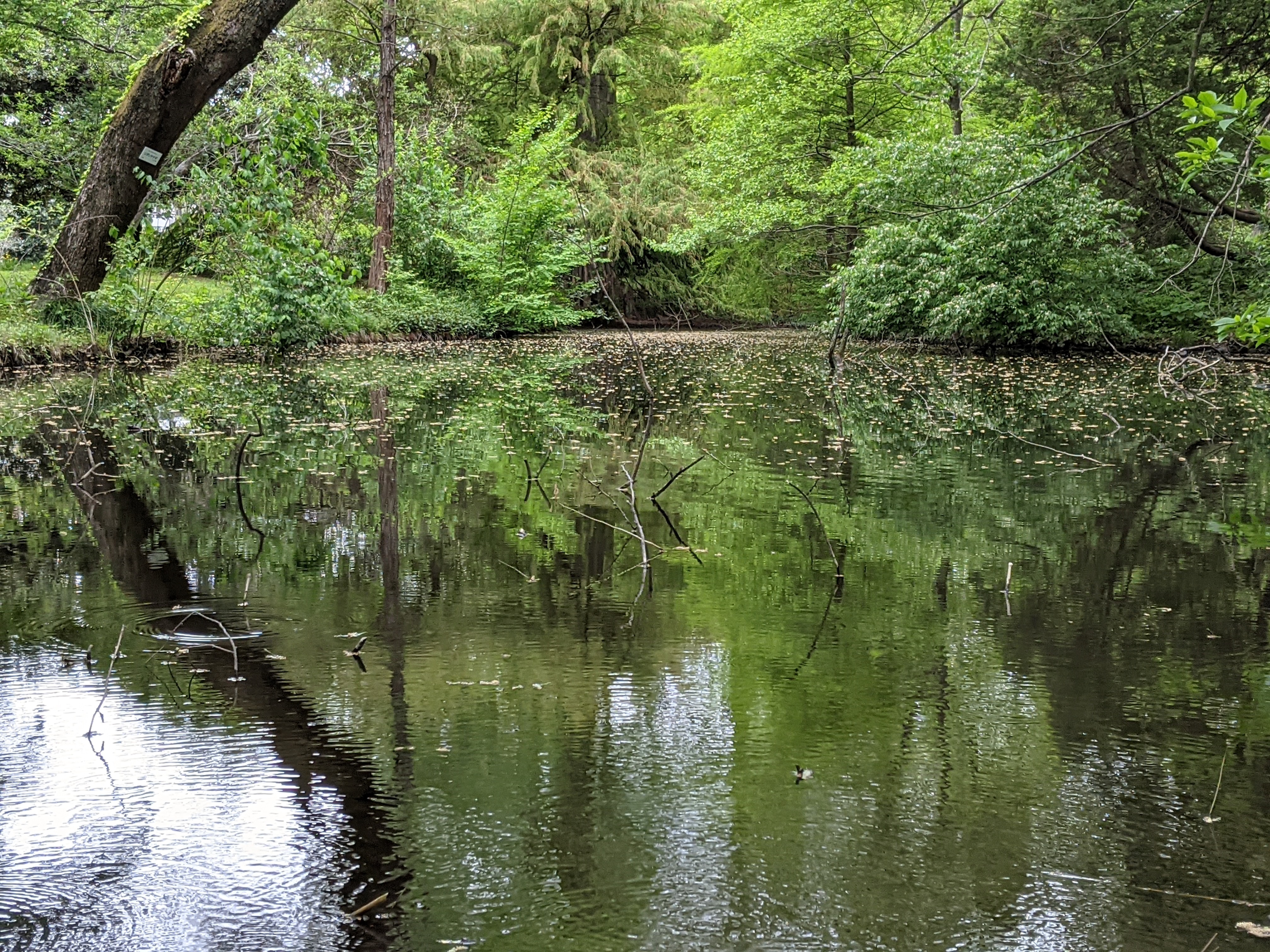
Living in Tokyo, otherwise nicknames as a concrete jungle, it is a blessing to ba able to enjoy outoodr natural environments like this. This is just a short walk from my house and it is a special place that makes living in a megacity a great experience.